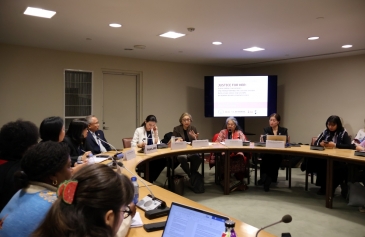



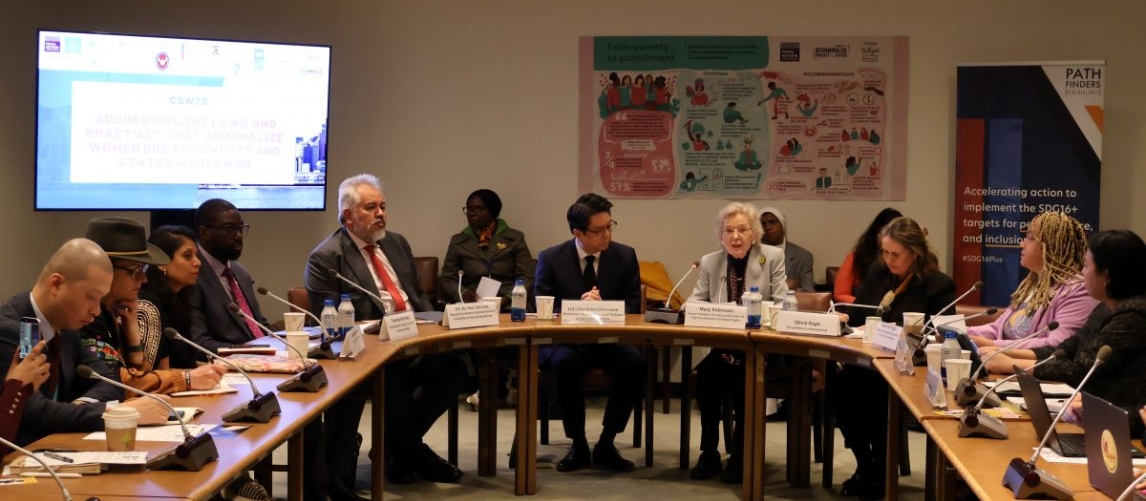


“Justice cannot mean punishing poverty, nor criminalizing survival… If we are truly committed to gender equality, our justice systems must not penalize women for surviving poverty or for simply being women”.
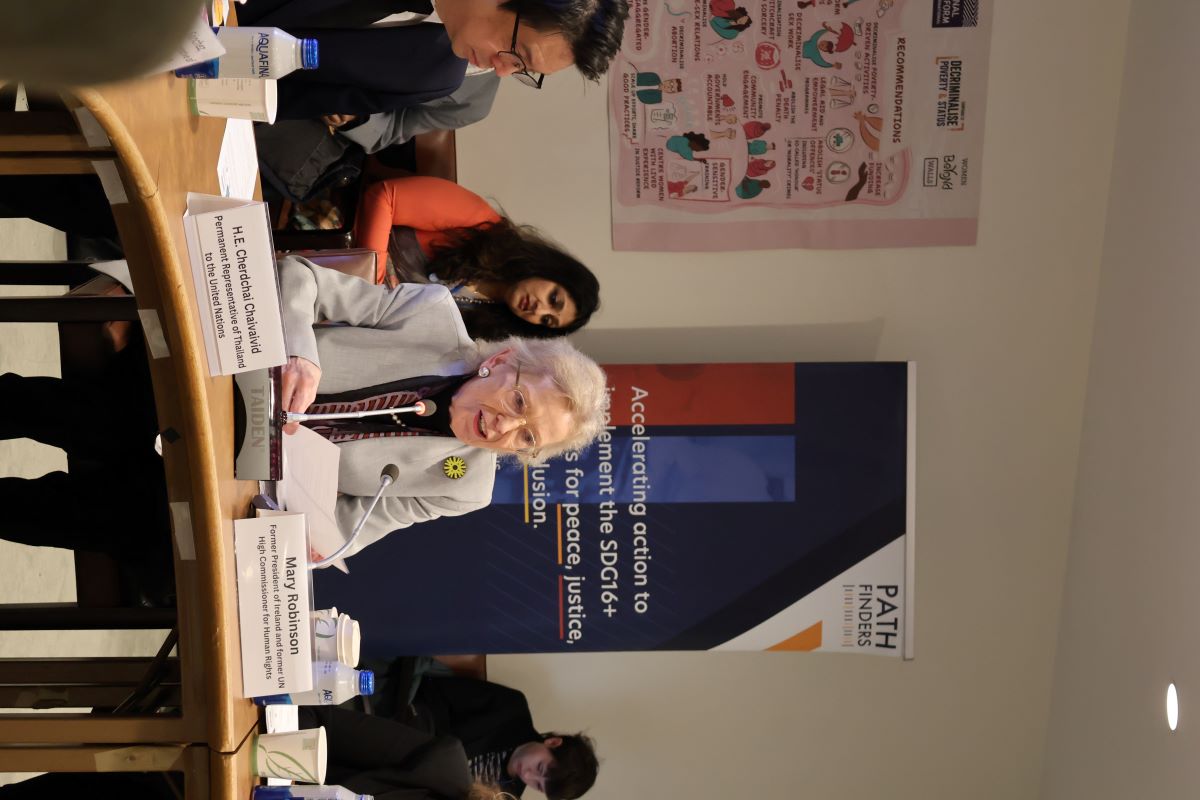
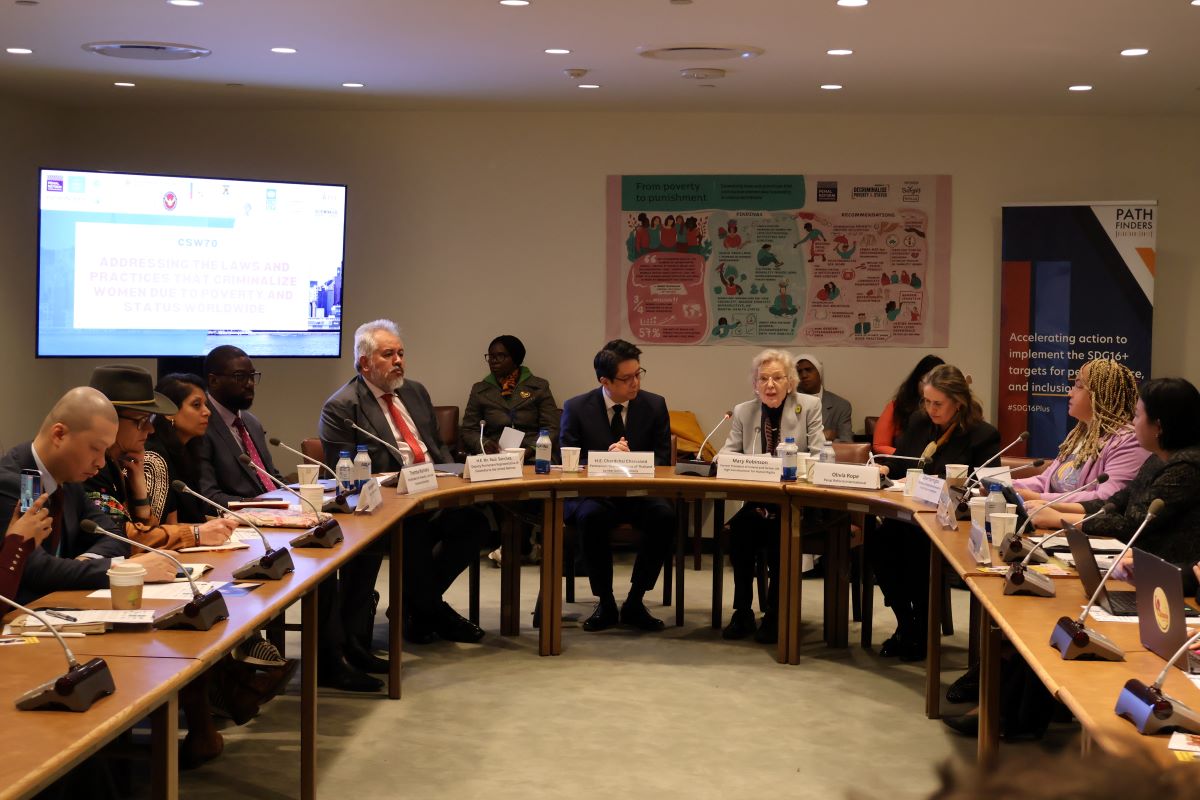
Mary Robinson, former President of Ireland, delivered these compelling remarks during her keynote speech at the side event entitled “Addressing the Laws and Practices that Criminalize Women Due to Poverty and Status Worldwide” on 18 March 2026, held at the margins of the 70th session of the Commission on the Status of Women (CSW70) in New York, USA.
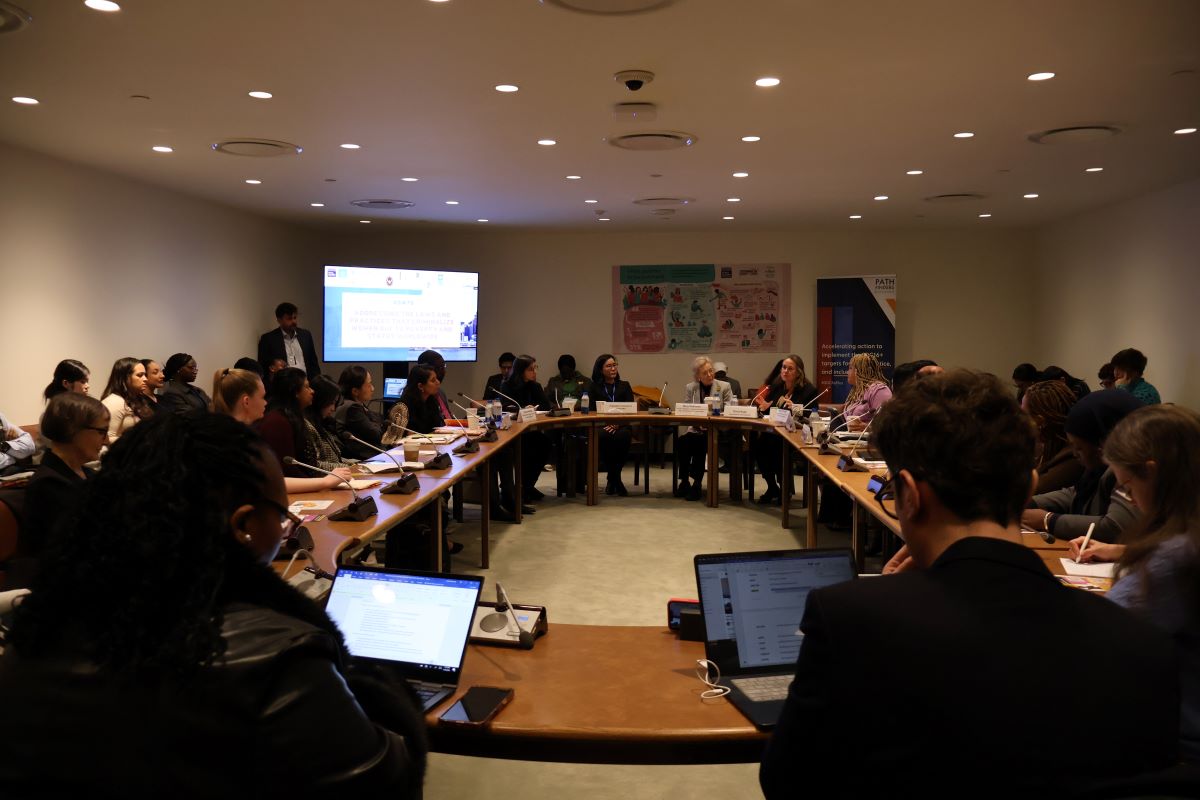
In its second consecutive year, the side event continued to focus on women’s criminalization and detention, and was jointly organized by the Thailand Institute of Justice (TIJ), together with Penal Reform International (PRI), Women Beyond Walls, Pathfinders for Peaceful, Just and Inclusive Societies, the Permanent Missions of Thailand, Colombia, Liechtenstein, and Romania to the UN, as well as UN Women, UNDP, UNODC, OHCHR, PBPSO, ILANUD, the Cyrus R. Vance Center for International Justice and the International Network of Formerly Incarcerated Women (INFIW).
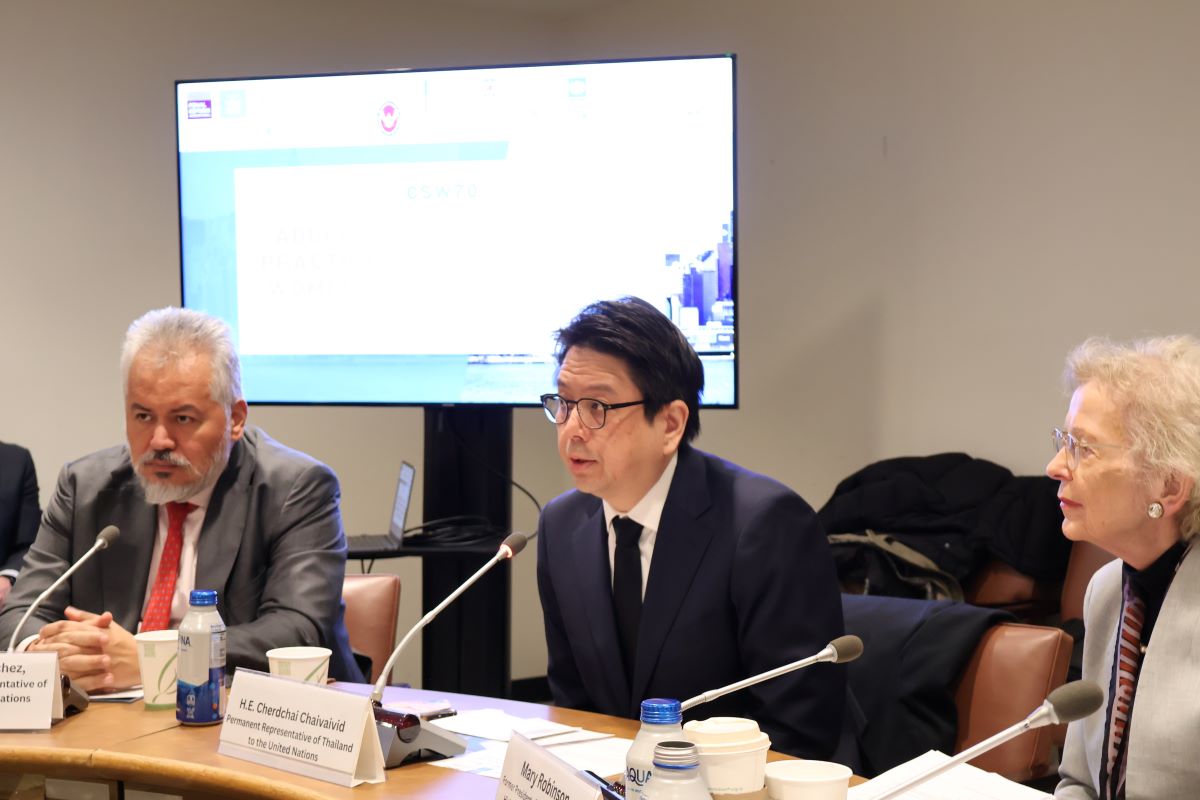
During the opening remarks, H.E. Mr. Cherdchai Chaivaivid, Ambassador and Permanent Representative of Thailand to the UN, highlighted how the Bangkok Rules—spearheaded by Her Royal Highness Princess Bajrakitiyabha Narendiradebyavati—have advanced the protection of women in detention globally. He underscored Thailand’s continued efforts to strengthen the implementation through the Bangkok Rules Accelerator, a joint initiative with UNODC, and reaffirmed Thailand’s commitment—building on its 2025–2027 Human Rights Council membership—to promoting and protecting the rights of women across all contexts.
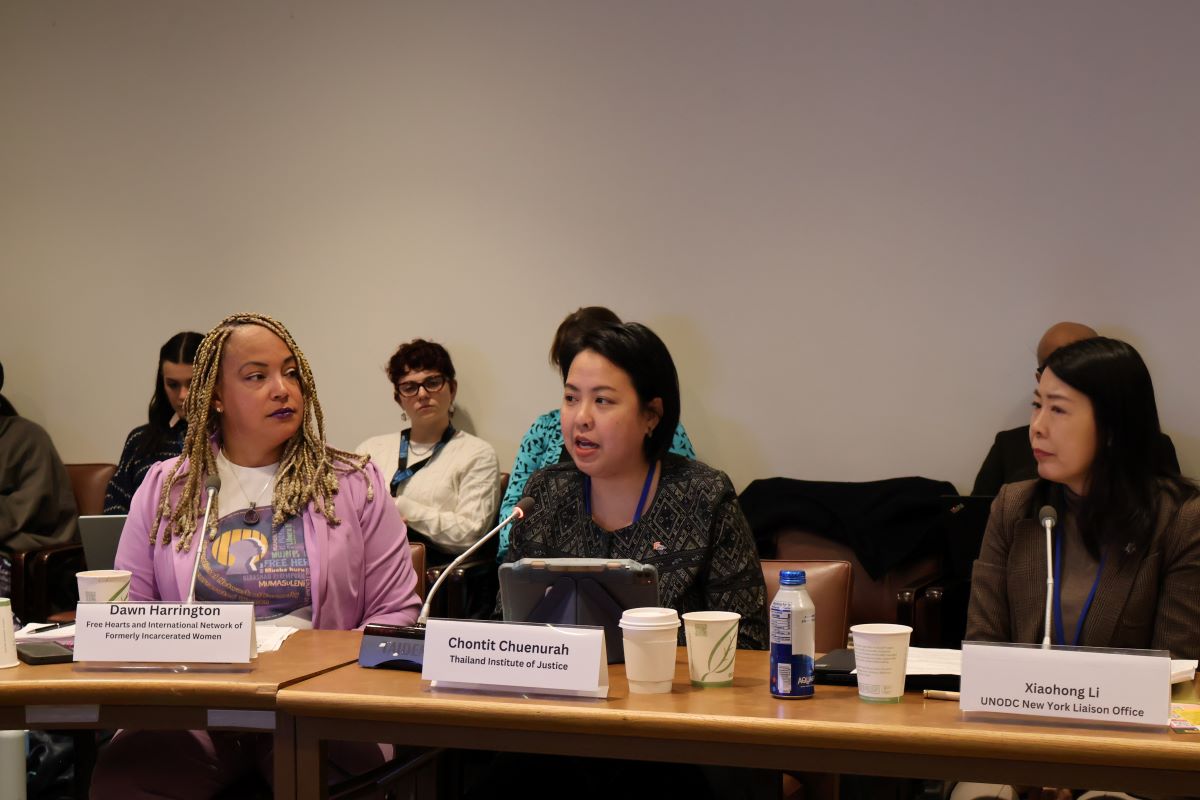
Chontit Chuenurah, Director of the Office for the Bangkok Rules and Treatment of Offenders at TIJ and a panelist at the side event, reflected that issues concerning women in detention have largely remained confined within criminal justice and prison reform discourse, with limited integration into broader gender equality agendas. This separation has constrained collective efforts to address the root causes of women’s involvement in the justice system. The inclusion of women in detention in the CSW70 Agreed Conclusions therefore marks a transformative shift, opening the door to more coherent and integrated engagement across key UN platforms, particularly the Commission on the Status of Women and the Commission on Crime Prevention and Criminal Justice.
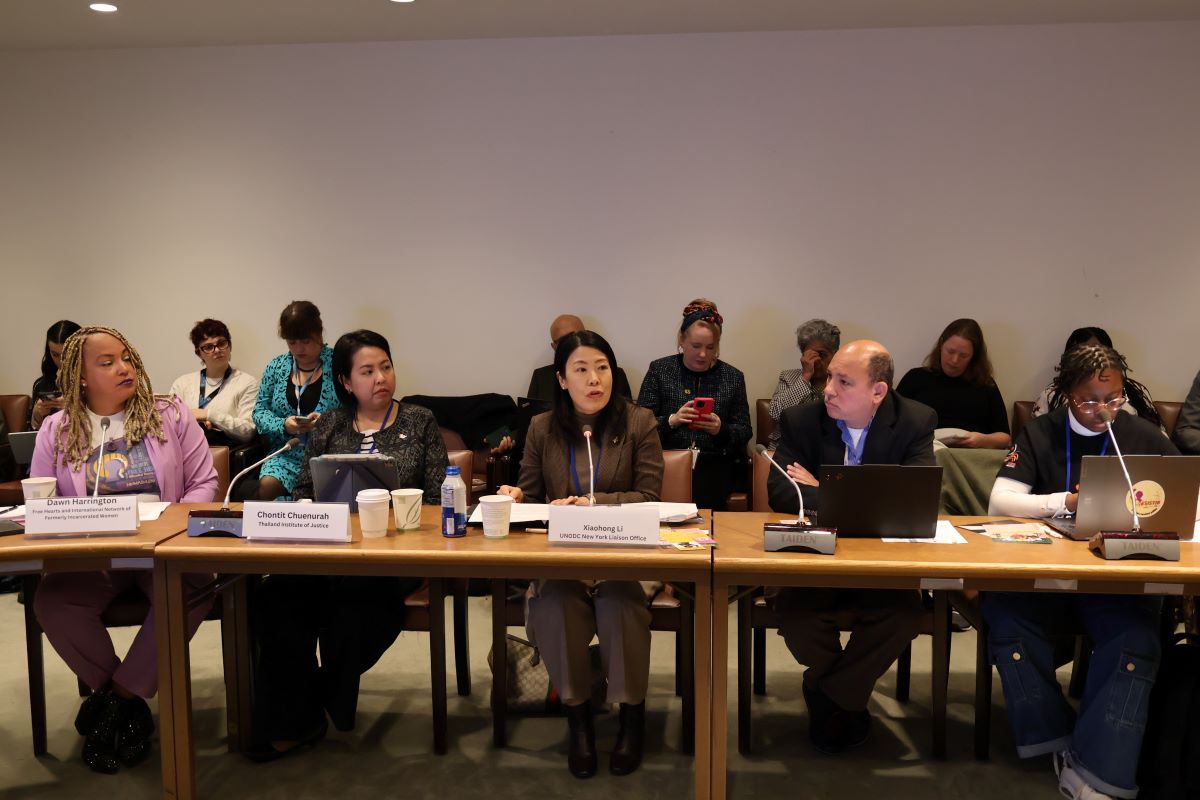
Moreover, in a panel discussion moderated by Olivia Rope, Executive Director of PRI, panelists—including Dawn Harrington, Executive Director of Free Hearts and Director of Special Projects at the National Council for Incarcerated and Formerly Incarcerated Women and Girls, and Xiaohong Li, Representative of the UNODC New York Liaison Office—emphasized the gender-specific pathways to women’s criminalization, including socioeconomic disadvantage, vulnerabilities, and socially constructed gender expectations, as well as the disproportionate impacts women face upon contact with the criminal justice system.
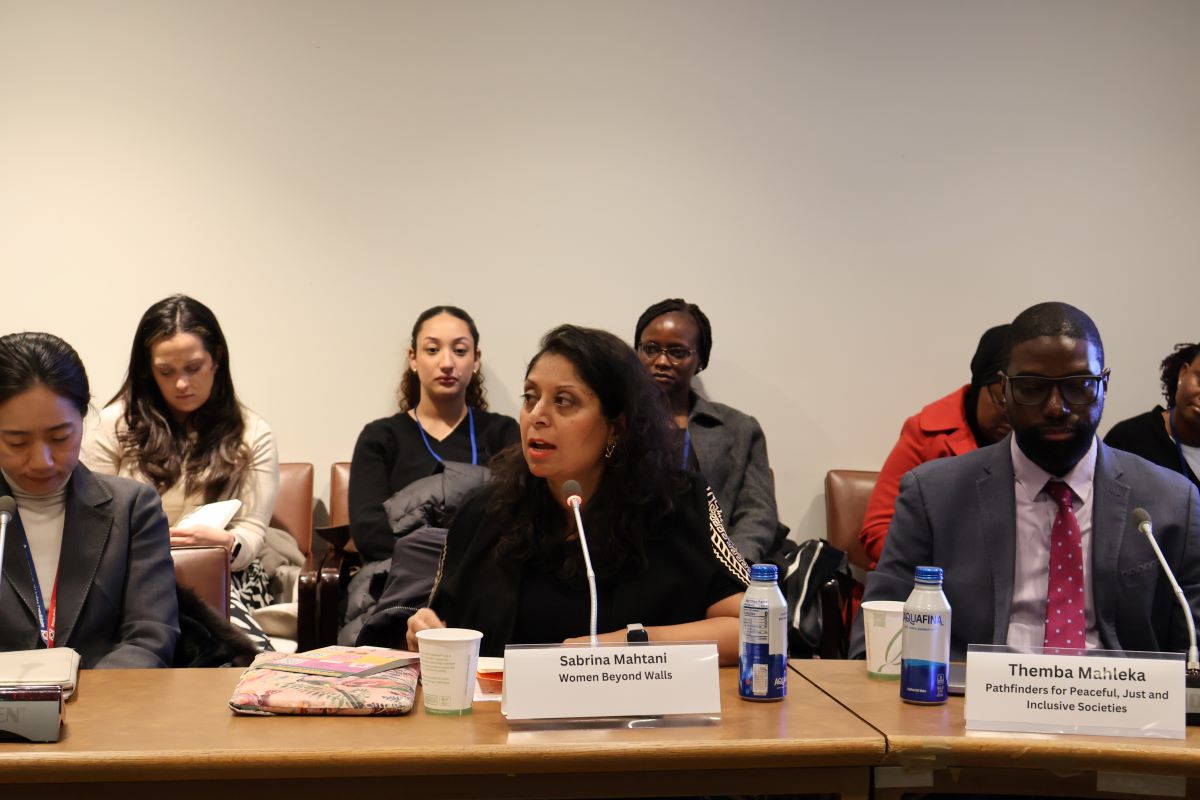
In closing, Sabrina Mahtani, Founder of Women Beyond Walls, shared key recommendations to pave the way forward, including promoting the meaningful inclusion of women with lived experience; strengthening the availability of accurate, up-to-date data on women in prisons; reprioritizing issues related to women in detention within policy agendas; and increasing investment and funding to improve the situation of women deprived of liberty worldwide, support non-custodial measures and community-based approaches, and foster destigmatization.