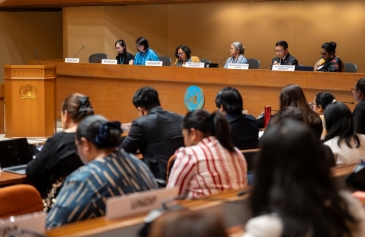



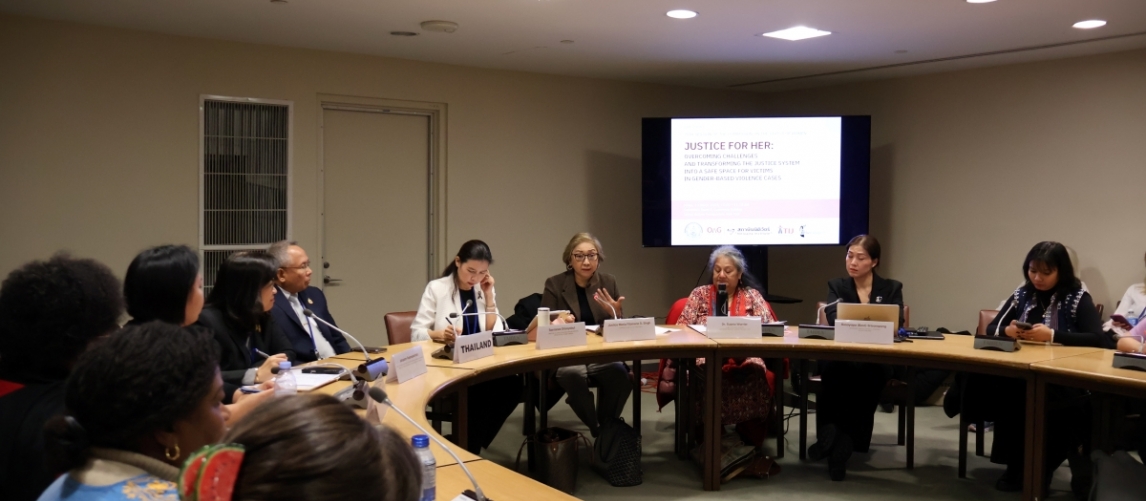


“Creating safe spaces for those who have experienced gender-based violence must take into account the experiences of all women who come into contact with the justice system—whether as victims, witnesses, suspects, or offenders.”
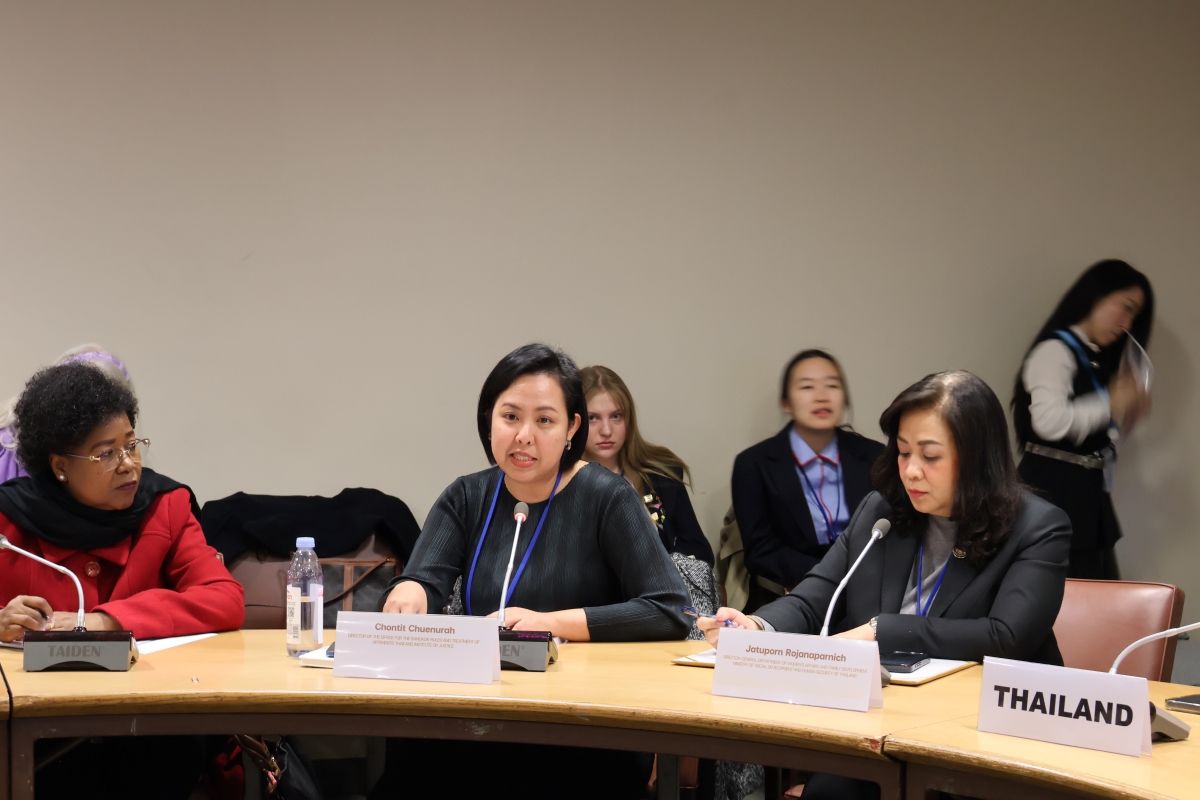
Ms. Chontit Chuenurah, Director of the Office for the Bangkok Rules and Treatment of Offenders at TIJ, delivered these remarks during the contextual introduction to the side event entitled “Justice for Her: Overcoming Challenges and Transforming the Justice System into a Safe Space for Victims in Gender-Based Violence Cases.”
“Building a victim-centred justice system should not be limited only to women who are victims or survivors. It must also recognize women who enter the criminal justice system as offenders, many of whom have themselves experienced violence at some point in their lives,” stated Ms. Chontit.
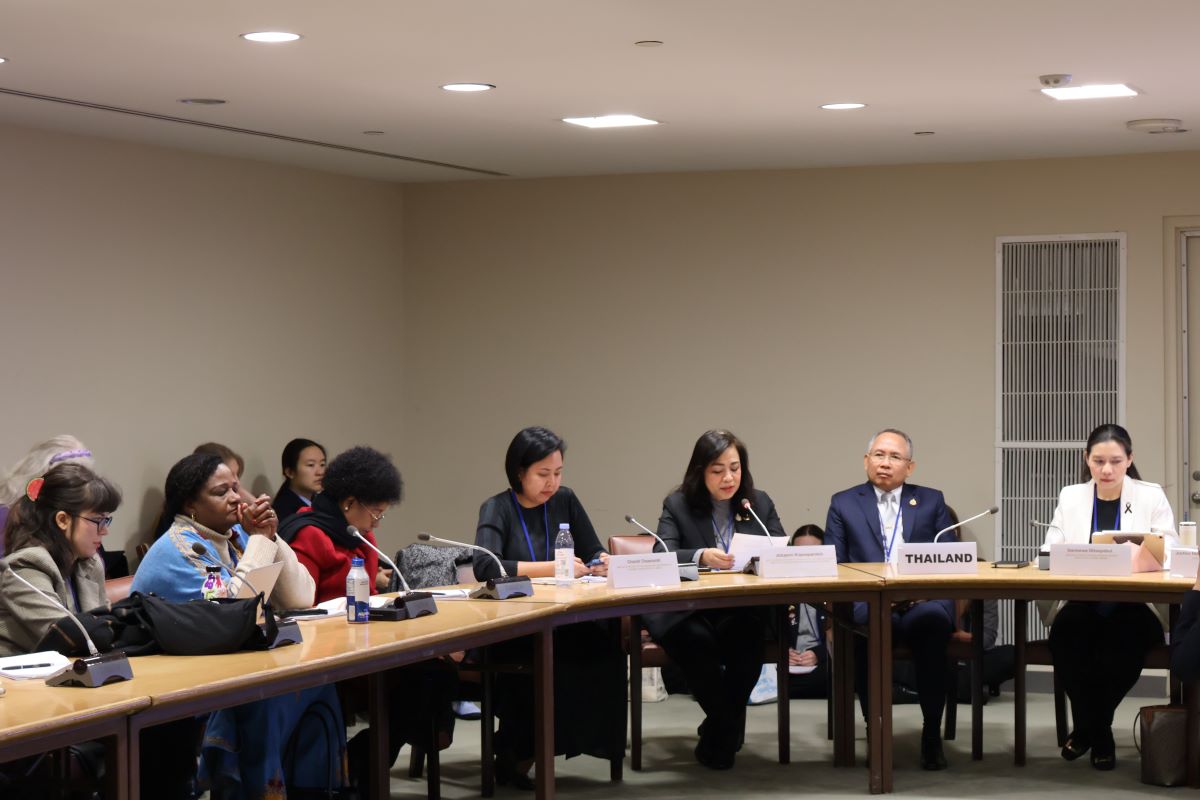
The event was jointly organized by the Department of Women’s Affairs and Family Development under the Ministry of Social Development and Human Security of Thailand, in collaboration with the Nitivajra Institute, Office of the Attorney General, the Thailand Institute of Justice (TIJ), and SHero Thailand, on Friday, 13 March 2026, during the 70th session of the Commission on the Status of Women (CSW70) in New York, USA.
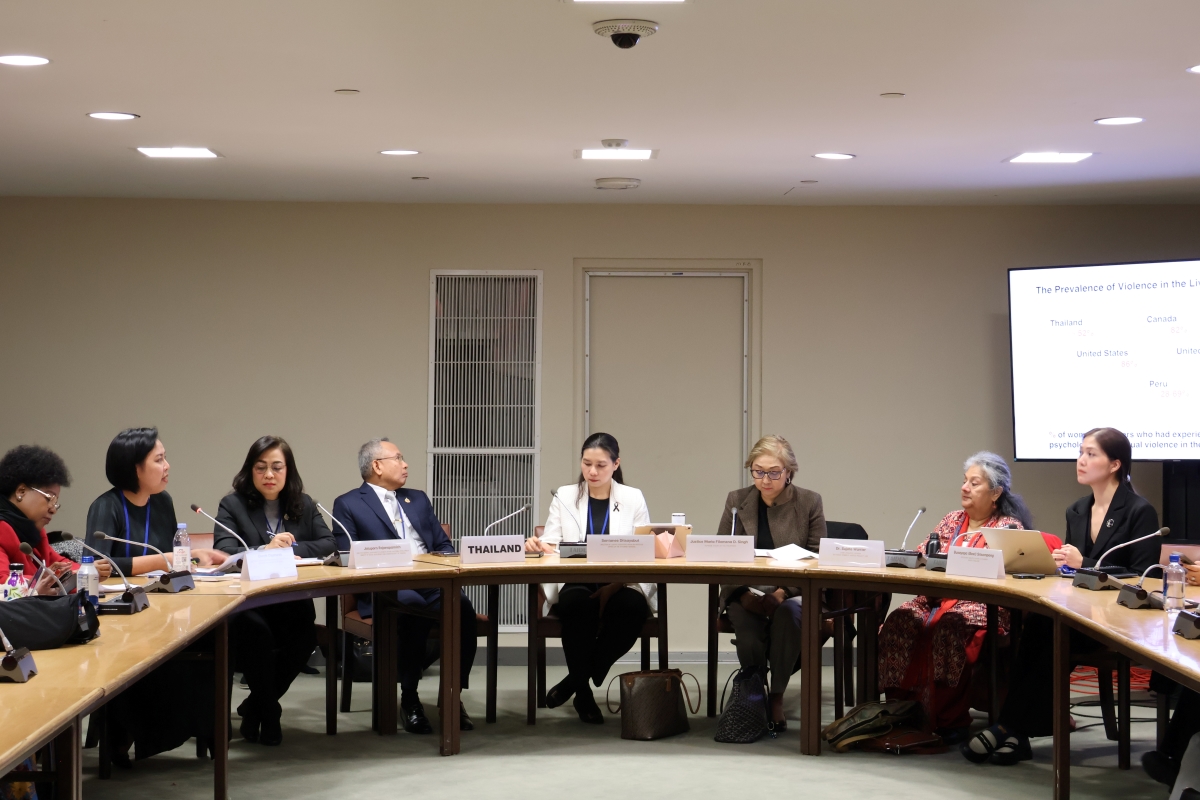
The event was graced by the presence of Mr. Kantapong Rangsesawang, Permanent Secretary of the Ministry of Social Development and Human Security, and featured opening remarks from Ms. Jatuporn Rojanaparnich, Director-General of the Department of Women’s Affairs and Family Development. Her remarks underscored the challenges facing justice systems worldwide, including stigma, gender bias, and the risk of retraumatizing survivors of violence.
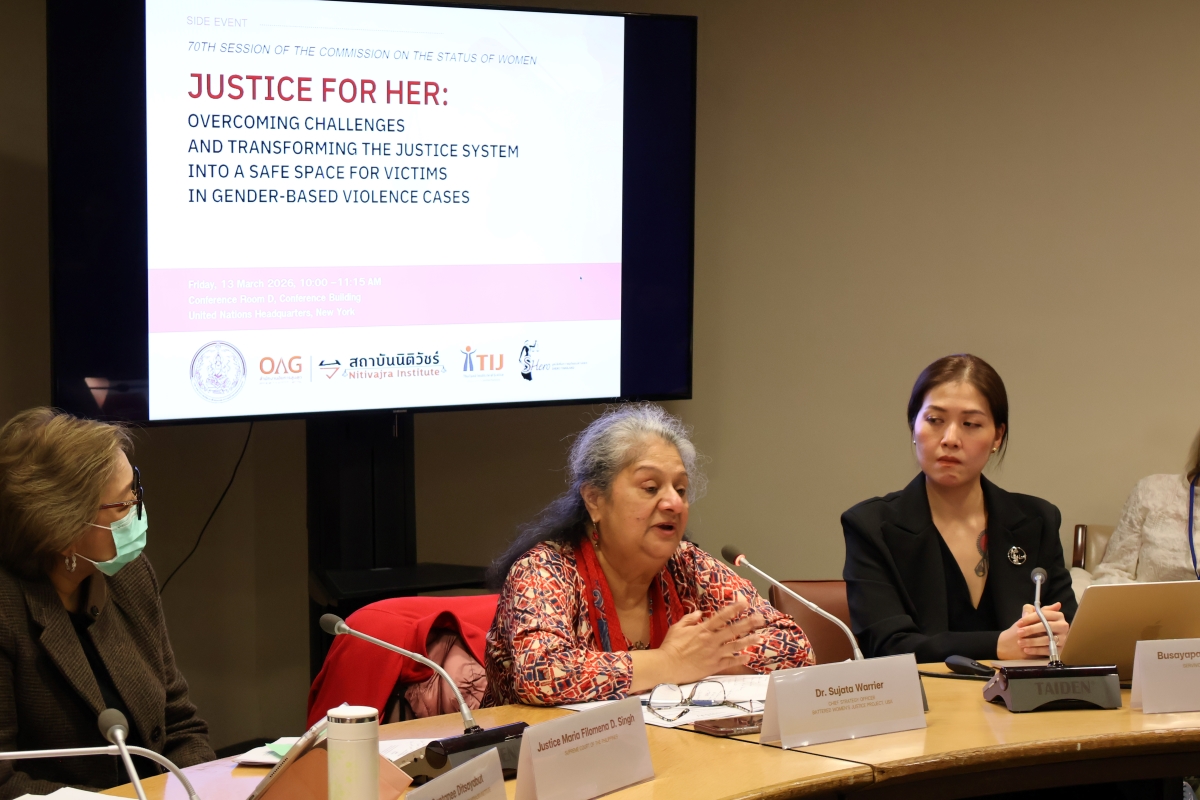
Justice Maria Filomane D. Sigh of the Supreme Court of the Philippines, one of the panelists, reflected on practical challenges, including case delays and limited access to information on rights and available support services. She also highlighted good practices, such as the development of victim-sensitive guidelines and the establishment of Justice Zones to enhance coordination among justice sector agencies and expedite case processing
In this regard, Ms. Chontit highlighted that the pathways leading women to prison are often closely linked to histories of physical and psychological violence and past trauma. Many women are also affected by economic and social inequalities. Therefore, taking into account the situations faced by women, expanding the use of non-custodial measures and community-based approaches, and ensuring accessible and effective legal assistance are among the key dimensions in line with the United Nations Rules for the Treatment of Women Prisoners and Non-Custodial Measures for Women Offenders (the Bangkok Rules), the Convention on the Elimination of All Forms of Discrimination against Women (CEDAW), and the Agreed Conclusion of the 70th session of the Commission on the Status of Women.
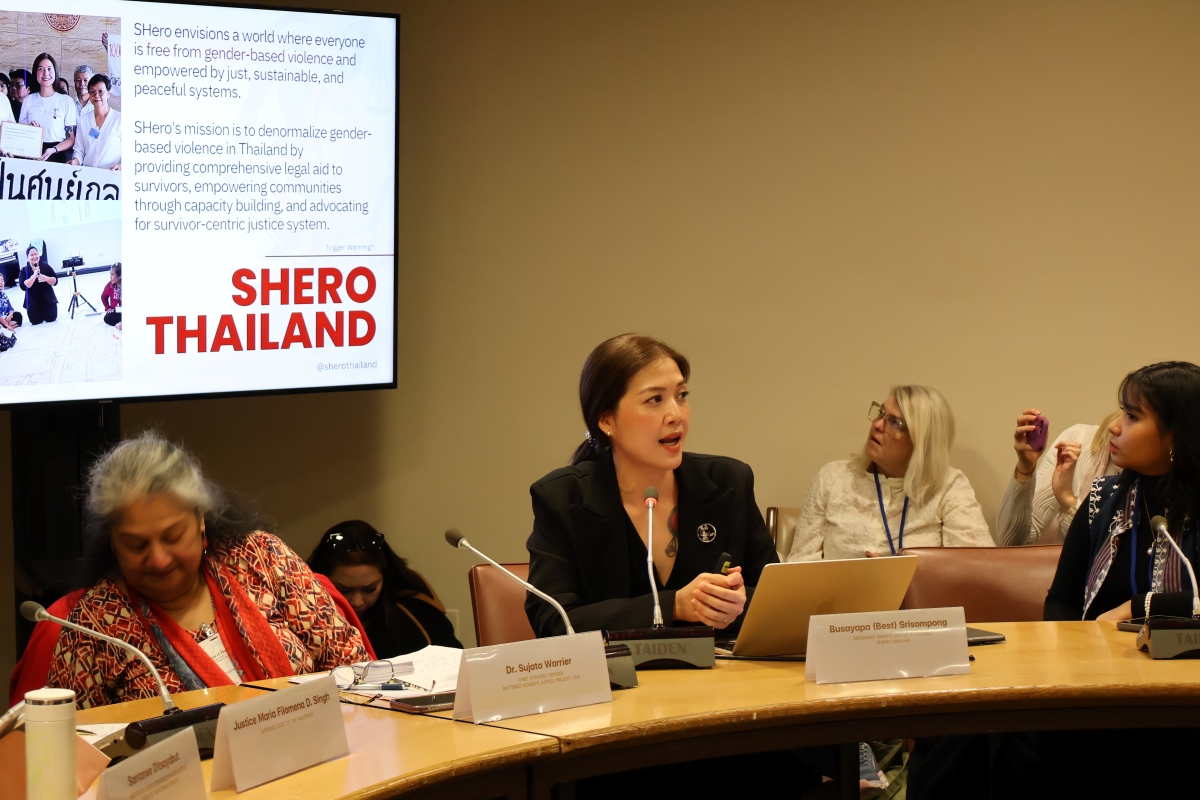
Moreover, during the panel discussion, moderated by Ms. Santanee Ditsayabut, Director of Justice Strategies at Nitivajra Institute, panelists—including Dr. Sujata Warrier, Chief Strategy Officer of the Battered Women’s Justice Project in the United States, and Ms. Busayapa Srisompong, Founder of SHero Thailand—exchanged views on challenges and good practices in criminal justice systems across different countries in protecting women victims in cases of gender-based violence.
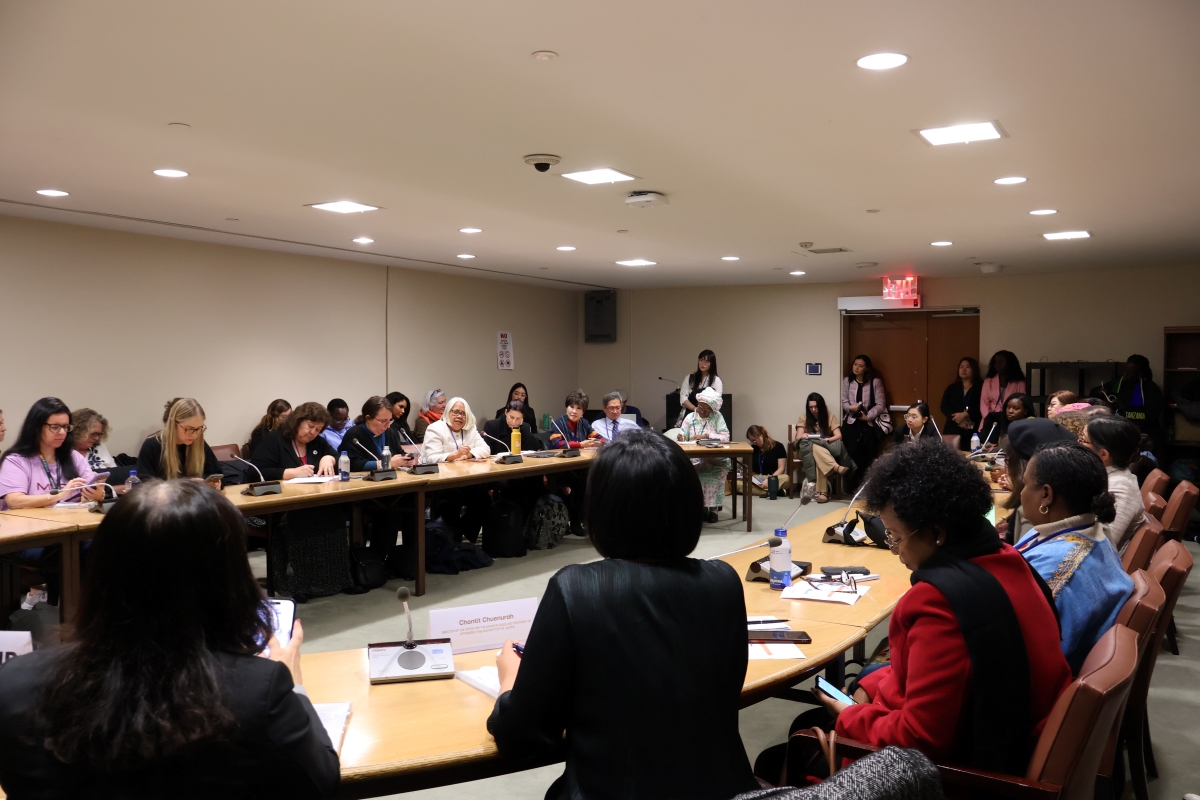
The discussion highlighted that although significant progress has been made in recent years in terms of legal reforms and policy support, important gaps remain. Addressing these gaps requires cooperation and understanding from all sectors to create safe spaces for those who have experienced gender-based violence to access justice at every stage of the process—from investigation and trial to sentencing—ensuring that justice processes are fair, accessible, and trauma-informed, while preventing revictimization and the reproduction of violence within the system.