



Publication
-
Justice Innovation for People - Centered Justice

21 Mar 2024
-
PNI Newsletter: Issue 4, Autumn, 2023
This 4th edition of the PNI Newsletter coincides with the thematic discussion of the United Nations Commission on Crime Prevention and Criminal Justice (CCPCJ) on the follow-up to the Kyoto Declaration, which took place on 21-22 September 2023. Accordingly, this issue dedicates significant focus to Pillar III of the Kyoto Declaration – “Promoting the Rule of Law”. A detailed analysis of the PNI’s engagement in the CCPCJ thematic discussion and its global activities supporting Pillar III implementation is featured in the first section. As we look forward to the 15th United Nations Congress on Crime Prevention and Criminal Justice in 2026, this issue offers an article by Dr. Matti Joutsen providing a comprehensive overview of the preparation and thematic discussions ahead. Furthermore, we proudly join in celebrating the 50th anniversary of the Australian Institute of Criminology, featuring an insightful article about the establishment of the Australian National Anti-Corruption Commission. To provide an intimate glance into individual institutes within our Network, this issue includes interviews with the Directors of HEUNI and the TIJ, offering a unique perspective into the inner workings and aspirations.
10 Jan 2024
-
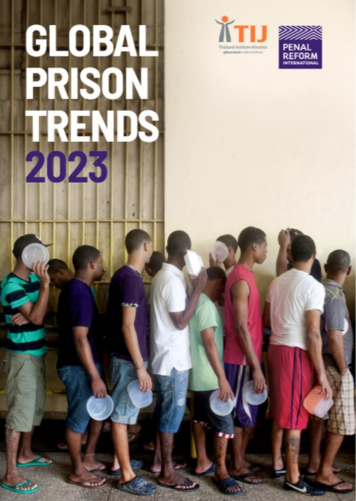
Global Prison Trends 2023
This 2023 edition of Global Prison Trends by Penal Reform International and the Thailand Institute of Justice is published at a time where a string of financial crises and ongoing impacts of the COVID-19 pandemic are greatly affecting vulnerable people around the world, including people in conflict with the law and theirs families. Also, the report centered on the analysis of the impact of prison overcrowding, prison administrations, and the progress of adoption of the Kyoto Declaration on Advancing Crime Prevention, Criminal Justice and the Rule of Law: Towards the Achievement of the 2020 Agenda for Sustainable Development.
20 Jun 2023
-
PNI Newsletter: Issue 3, 2023
The 32nd Session of the Commission on Crime Prevention and Criminal Justice (CCPCJ) is held from the 22nd — 26th May 2023 in Vienna. This third issue of the PNI Newsletter highlights the role of the PNI in organizing the CCPCJ workshop with the briefing document on access to justice and realizing a secure society. This issue also focuses on the PNI contribution to the UN Crime Programme and includes updates on activities undertaken during 2022 and early 2023 in the implementation of the Kyoto Declaration. With an aim to share information and knowledge, this issue contains three short articles: on Comparing the Negotiations on the Proposed UN Cybercrime Convention with Earlier Conventions, by Dr. Matti Joutsen, on restorative justice for sexual offences, by Dr. Siobhan Lawler and on the topic of the collaborative and people-centred approach to justice reform by Dr. Kittipong Kittayarak. To provide a closer look at individual Institutes, this issue features interviews with directors of the National Institute of Justice (NIJ) and the United Nations Asia and Far East Institute for the Prevention of Crime and Treatment of Offenders (UNAFEI).
05 May 2023
Handbook on Restorative Justice Programmes - Second Edition

หน่วยงานผู้จัดทำ :
เผยแพร่วันที่ : September 2021
Executive Summary: Women's Pathways Into, Through, and Out of Prison
Executive Summary: Women's Pathways Into, Through, and Out of Prison. Understanding the Needs, Challenges and Successes of Women Imprisoned for Drug Offending and Returning to Communities in Thailand.
หน่วยงานผู้จัดทำ : TIJ, Griffith University
เผยแพร่วันที่ : August 2021
Executive Summary: Global Prison Trends 2021
-
หน่วยงานผู้จัดทำ : TIJ, Penal Reform International
เผยแพร่วันที่ : August 2021

TIJ Growing Bright: 10th Anniversary of the TIJ
The TIJ’s “Growing Bright” booklet summarizes a decade of our works with collection of brief messages and testimonies from many long-term friends. We are thankful for your contribution and humble to receive your warm wishes. We committed to strengthening our close ties in the years to come and work towards the ultimate goal of creating better justice for everyone.
หน่วยงานผู้จัดทำ : TIJ
เผยแพร่วันที่ : June 2021

The Futures Thinking Curriculum
After a year of research and testing, TIJ’s Justice Innovation Unit is excited to present to you “The Futures Thinking Curriculum: A Foresight Approach to Social Justice’ (1st edition). This curriculum features a curated list of strategic foresight tools that builds on existing best practices and prototyped specifically for social justice issues. Justice Innovation Unit has been promoting an innovative and collaborative approach to sustainably address social justice issues, focusing on understanding relevant and up-to-date solutions as well as shifting the mindset of changemakers. We believe that futures thinking is a powerful tool for the justice sector where resistance to change is high and the delivery of justice services may not always be user-centric or effective.
หน่วยงานผู้จัดทำ : TIJ
เผยแพร่วันที่ : June 2021
Global Prison Trends 2021
The Global Prison Trends 2021 is an annual publication by Penal Reform International (PRI) and the Thailand Institute of Justice (TIJ), which provides a comprehensive overview of trends in the use of imprisonment and specific prison management issues, with a focus on crime prevention and criminal justice. One year on from the Coronavirus pandemic, the report this year explores the impact of COVID-19 on prison systems around the world, with a special focus on prisons in crises.
หน่วยงานผู้จัดทำ : TIJ, Penal Reform International
เผยแพร่วันที่ : May 2021

