

Scandinavian and OECD experts stress that Thai state agencies must be strong, enforce laws effectively, and open channels for transparent scrutiny across all sectors
“For the Nordic countries, having laws is merely the starting point, whereas consistent enforcement and genuinely accountable institutions are what drive a country’s growth. Nevertheless, every country must chart its own growth path, taking into account its institutions, history, and shared priorities in addressing challenges,” said H.E. Danny Annan, Ambassador of Denmark to Thailand, during the forum “Transparency and Competitiveness: Thai–Nordic Dialogue on Good Governance as a Growth Engine Towards OECD-membership.”
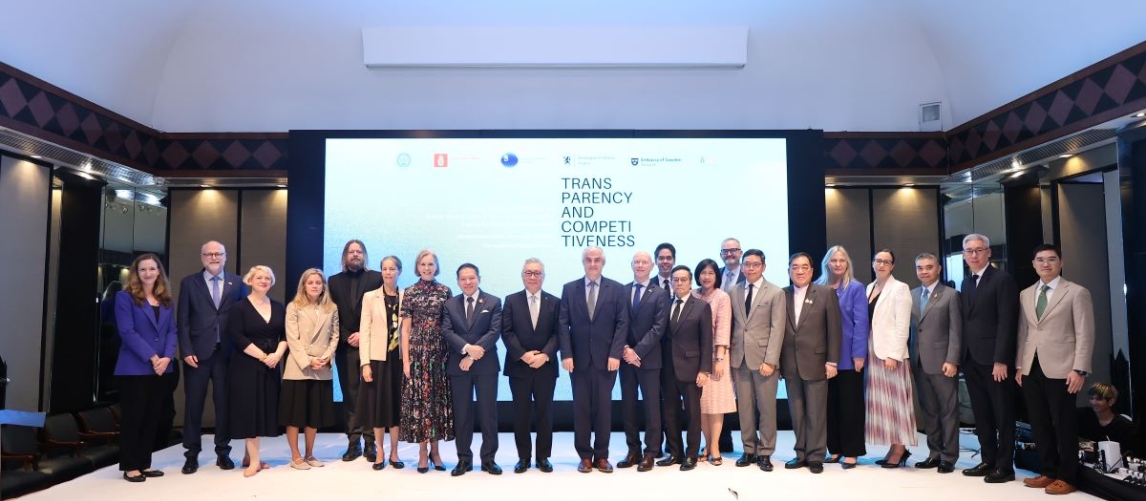
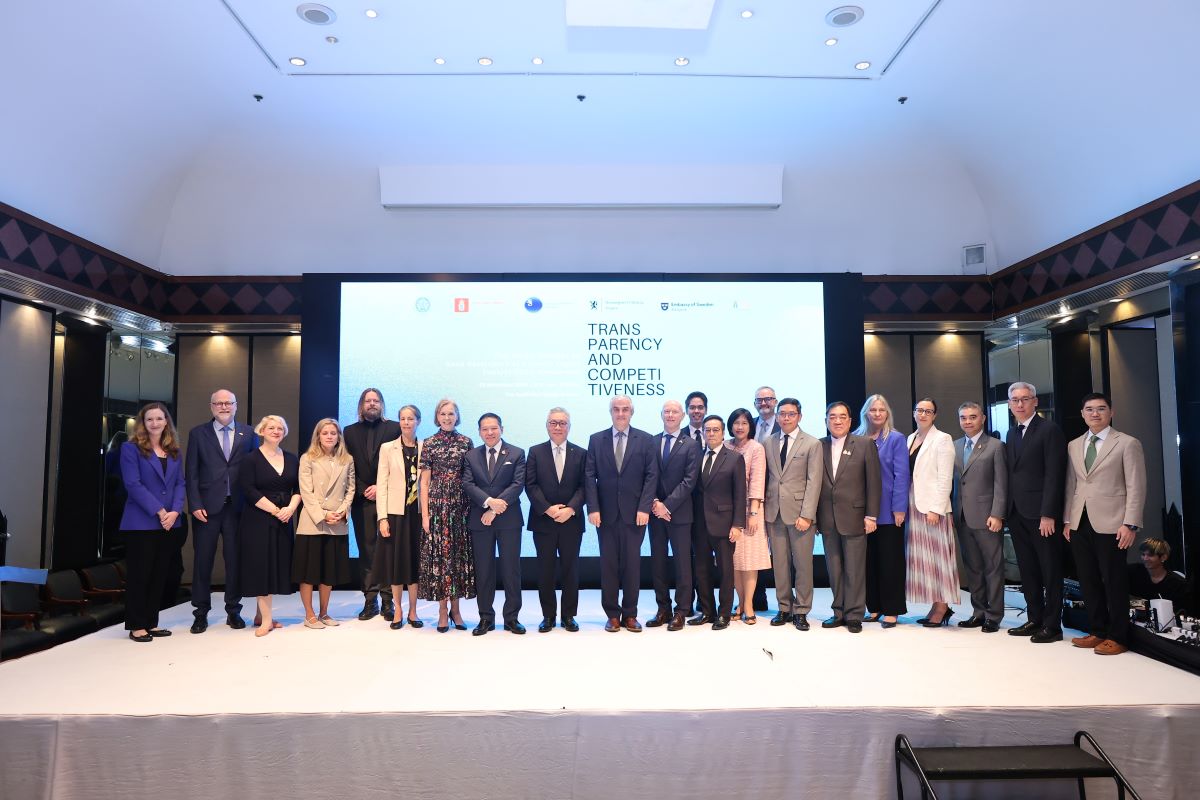
This pivotal forum, held on 25 November 2026 (B.E. 2569) at The Sukhothai Bangkok, brought together perspectives and experiences from policymakers, international organisations, the business sector, and civil society—particularly from the Nordic countries (Denmark, Finland, Norway, and Sweden) and the standards of the Organisation for Economic Co-operation and Development (OECD)—to draw lessons and identify key priorities for Thailand in becoming an OECD member by 2028 (B.E. 2571) and achieving high-income country status by 2037 (B.E. 2580).
The core message of the meeting made clear that escaping the middle-income trap in Thailand does not lie solely in having laws on paper that can be genuinely enforced, but also in strengthening public institutions, enforcing laws equitably, reducing hidden costs, and opening up space for transparent scrutiny across all sectors. In particular, law enforcement was highlighted repeatedly at the forum as a challenge for Thailand.
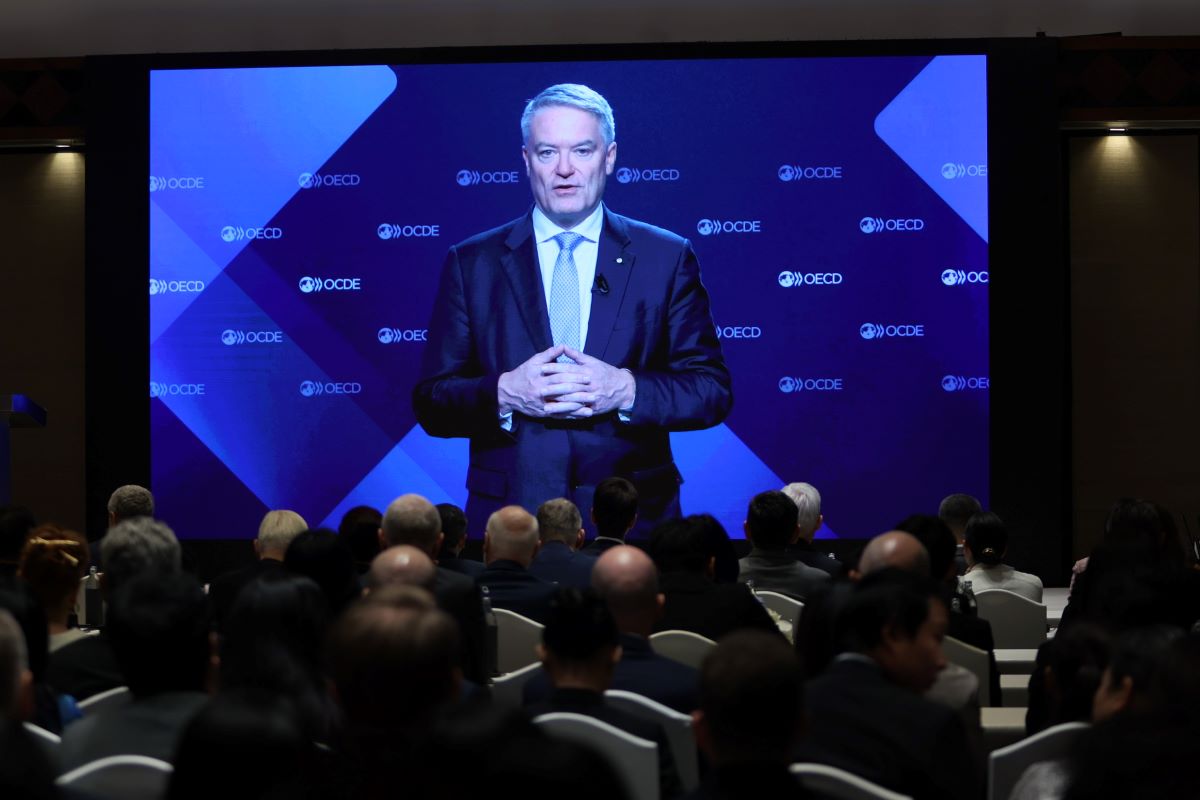
“The main challenge for many countries, including Thailand, is not passing laws, but implementation,” said Mr. Mathias Cormann, Secretary-General of the OECD, in remarks delivered via video message, emphasising that trust from businesses and citizens arises from honest and comprehensive law enforcement without relying on overly heavy-handed enforcement.
The OECD executive also spoke about Thailand’s accession agenda, noting that while Thailand’s anti-corruption strategy performs above the OECD average in both policy and practice—which, if built upon, can support economic growth—challenges remain, citing Thailand’s conflict-of-interest legislation, where Thailand’s legal framework aligns with OECD standards at 78 per cent, yet actual practice stands at 11 per cent.
He further stated clearly that Thailand must pass the OECD Anti-Bribery Convention, which requires legal reforms across three key areas: elevating the offence of bribing foreign public officials, corporate liability, and legal clarity, adding that the review process will only move forward once genuine practical reforms take place, and noting that Thailand has already reviewed the laws three times, making effective enforcement the next step to unlock its targeted OECD membership.
Good Governance and the Rule of Law Are at the Heart of OECD Membership
On this occasion, senior leaders and representatives of key organisations delivered keynote remarks and shared strategic perspectives.
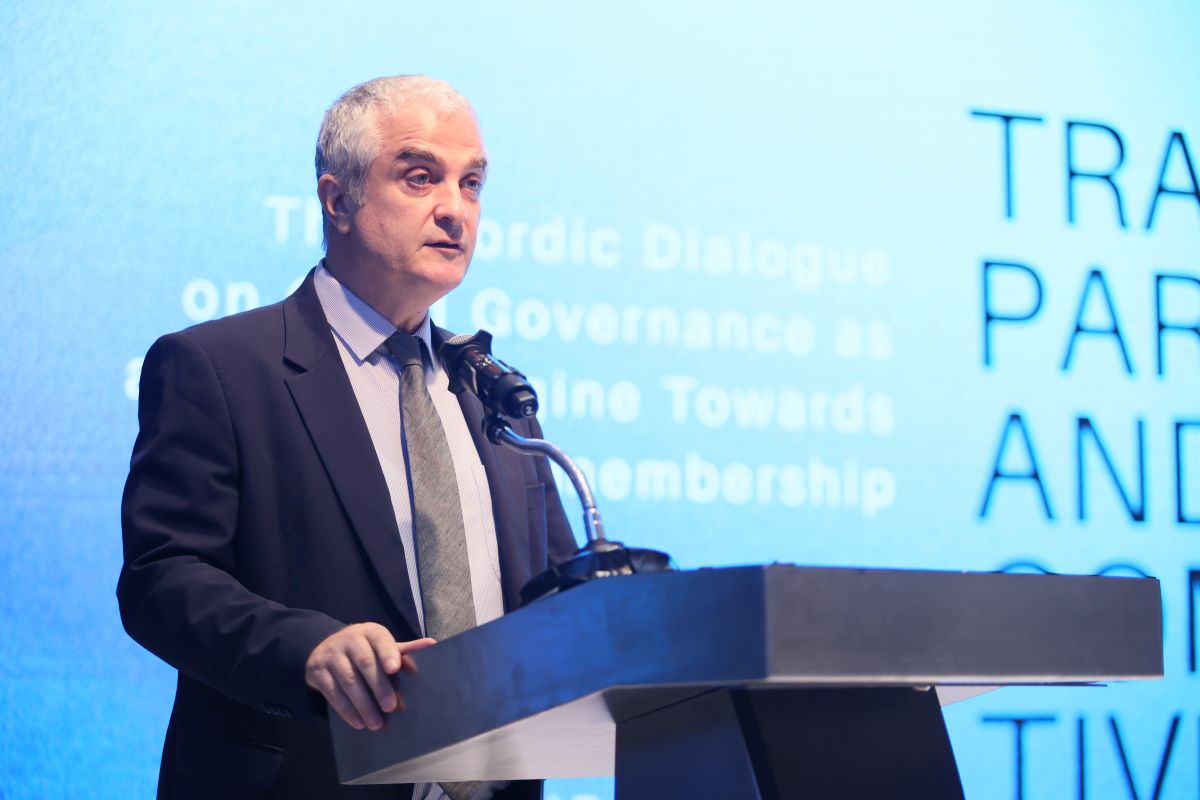
H.E. Mr. Danny Annan, Ambassador of Denmark to Thailand, opened the forum by emphasising that good governance is not the sole responsibility of the government, but requires whole-of-society collaboration across academia, civil society, and international organisations. Good governance is not merely about laws or regulations, he noted, but about creating an environment conducive to economic success, enabling businesses to grow, creating jobs, and investing in a fair and predictable atmosphere.
He observed that the success of the Nordic countries—characterised by high trust and low corruption—stems from building independent institutions, professional management, a competitive private sector committed to transparency and accountability, a free press, and a strong civil society, before concluding that laws are only a starting point, whereas earnest enforcement and impartial, accountable institutions are the true drivers of countries’ growth, and that Thailand can pursue participatory development approaches that take into account its own background and context.
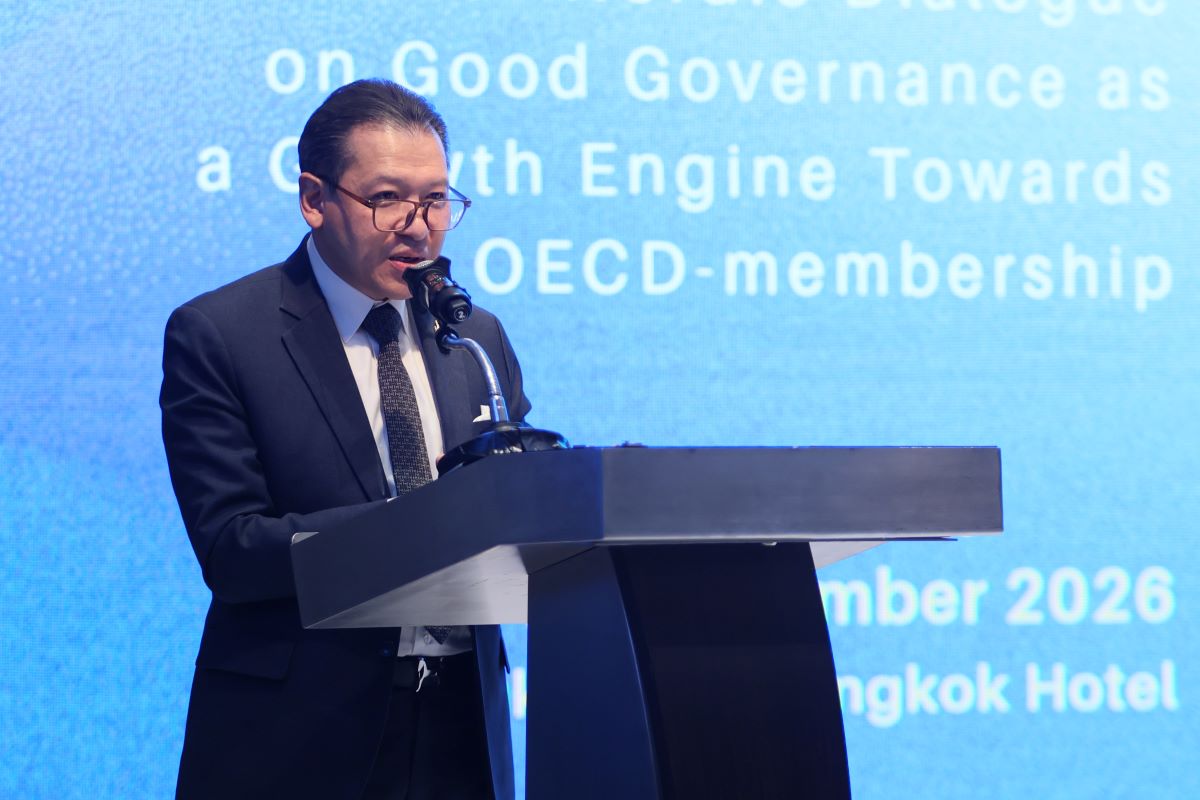
H.E. Mr. Sarun Charoensuwan, Vice Minister for Foreign Affairs, Ministry of Foreign Affairs, stated that Thailand and the Nordic countries enjoy close relations in trade, investment, and the promotion of the rule of law. Currently, more than 350 Nordic companies operate in Thailand, with trade value around US$9 billion in the past year, while Thailand is advancing negotiations on a Thailand–European Union Free Trade Agreement (FTA), and this meeting comes at an opportune moment after Thailand recently held discussions with the OECD on business and labour to finalise its Country Programme towards the goal of OECD membership in 2028 (B.E. 2571), aligning with Thailand’s ASEAN Chairmanship in the same year.
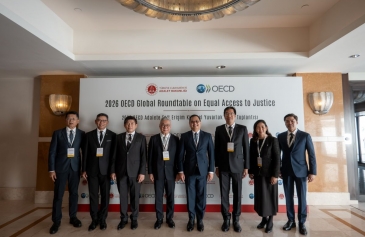
H.E. Mr. Sarun also emphasised that legal reform and strengthening public integrity—commitments for Thailand in joining the OECD—offer an opportunity to lower the cost of doing business and create certainty for investors, with the public sector needing to lead transparently and accountably, while highlighting the important opportunity for the Thailand Institute of Justice (TIJ) to host the OECD Global Roundtable on Equal Access to Justice next year (2027 / B.E. 2570) to advance equal justice alongside attracting investment.

Prof. Dr. Kittipong Kittayarak, Chairman of the Board of the Thailand Institute of Justice (TIJ), shared the perspective that the rule of law is an invisible infrastructure and likened it to a country’s operating system, because no matter how good physical infrastructure may be, without a fair and accountable rule of law that listens to people’s voices, the economy cannot operate at full efficiency.
The TIJ Chairman further stressed that based on the WJP Rule of Law Index, all four Nordic countries consistently rank among the top in the world, whereas Thailand has made progress in legal reform but still needs to urgently close implementation gaps. Joining the OECD, which is now a national agenda, serves as a catalyst to open space for the private sector and independent watchdogs to act as co-owners of reform, citing examples such as linking public data through the Open Government Partnership (OGP), which TIJ has continuously supported, as well as organising initiatives that bring all sectors of society together across institutional boundaries to drive the rule of law so that citizens can genuinely experience it in society.
Recommendations from the Breakout Session: Pulse Check and Nordic Expert Perspectives: Why Good Governance Matters for the Economy?
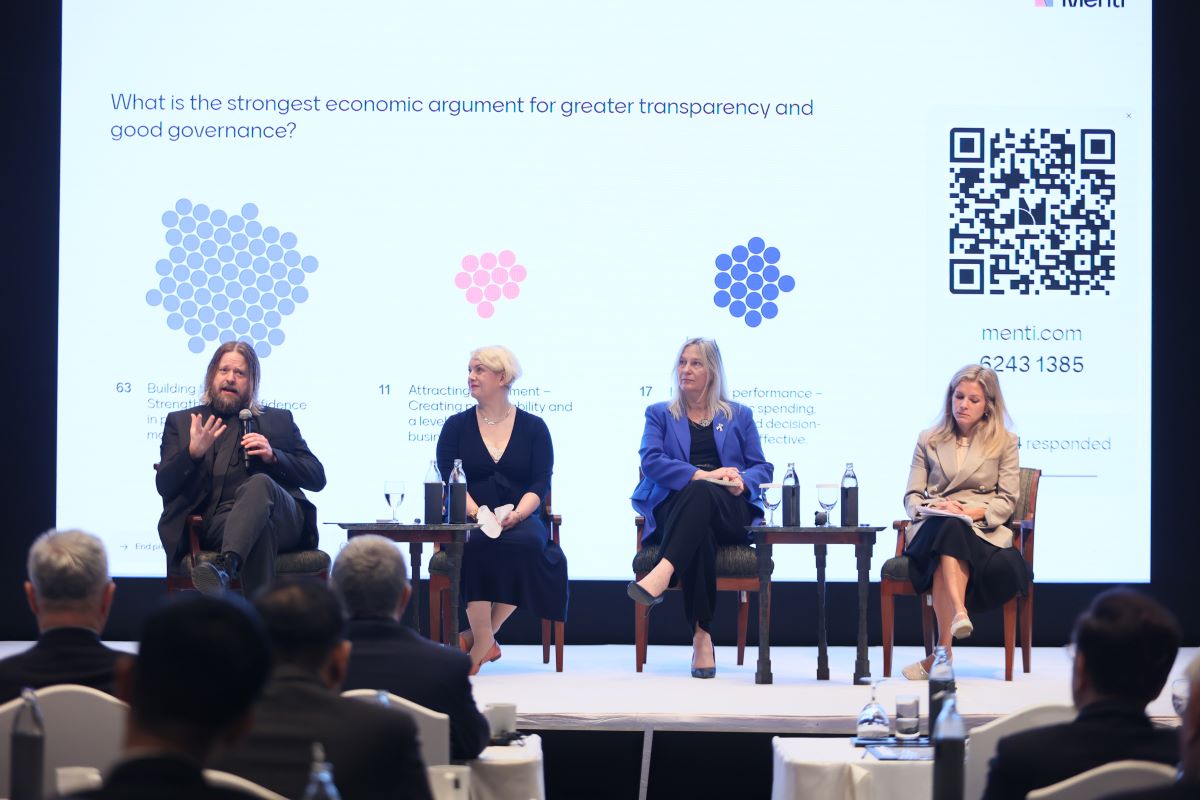
In this session, experts from the Nordic countries and the business sector jointly analysed the link between institutional quality and economic competitiveness, while proposing ways to elevate trust.
Building Professional and Impartial Institutions Instead of Patronage
Prof. Mogens Kamp Justesen of Copenhagen Business School stated that strong institutions are the foundation of investment and economic growth. If institutions are weak, businesses turn to political connections and preferential treatment in obtaining licences, distorting the level playing field. A high-capacity state must have a professional, impartial civil service with sufficient budget and personnel, enforce laws equally across businesses of all sizes, and open itself to independent scrutiny.
Raising Supply Chain Standards and Opening Space for Media and Civil Society
Ms. Linda Piirto, Head of Supply Chain and Governance at UN Global Compact Finland, pointed out that investors choose investment markets by considering guarantees of transparency and Know Your Customer (KYC) due diligence. She also shared that the European Union and the United Nations are currently strengthening anti-corruption regulations and sanctions by expanding definitions to cover improper influence peddling, which will affect entire supply chains, including business partners in Thailand. Thailand therefore needs to integrate efforts across the public sector, civil society, academia, and the media to scrutinise operations across sectors independently, building verifiable transparency and fostering confidence to attract investors.
Accelerating Policy Communication into Practice to Overcome the Middle-Income Trap
Ms. Vibeke Lyssand Leirvåg, Chair of the Joint Foreign Chambers of Commerce in Thailand (JFCCT), which has more than 8,000 member companies across 30 chambers, emphasised that the state must not only attract new investment, but also retain the confidence of current investors through fair law enforcement amid Thailand’s middle-income trap and intense competition from neighbouring countries such as Viet Nam. Applying for OECD membership is an important signal watched closely by foreign investors. In addition, business organisations and the public sector must prioritise communicating and building understanding around governance, ESG rules, and international standards from executive leadership down to front-line practitioners so everyone shares the same picture and moves in the same direction.
Turning “Trust” into an “Economic Asset” Through Disclosure
Ms. Victoria von Uexküll, Secretary-General of The Swedish Anti-Corruption Institute (IMM), said that trust is akin to an economic asset confirming that state operations are fair and worthwhile for investment. Lessons from Sweden show that having a clear anti-corruption code of conduct alongside genuine public access to official documents is a vital foundation of transparency and empowers civil society and the private sector—such as Thailand’s Collective Action Against Corruption (CAC) network—to collaborate effectively in oversight.
Progress on Thailand’s OECD Readiness from the High-Level Dialogue: “Reshaping Institutional Foundation for OECD Readiness”
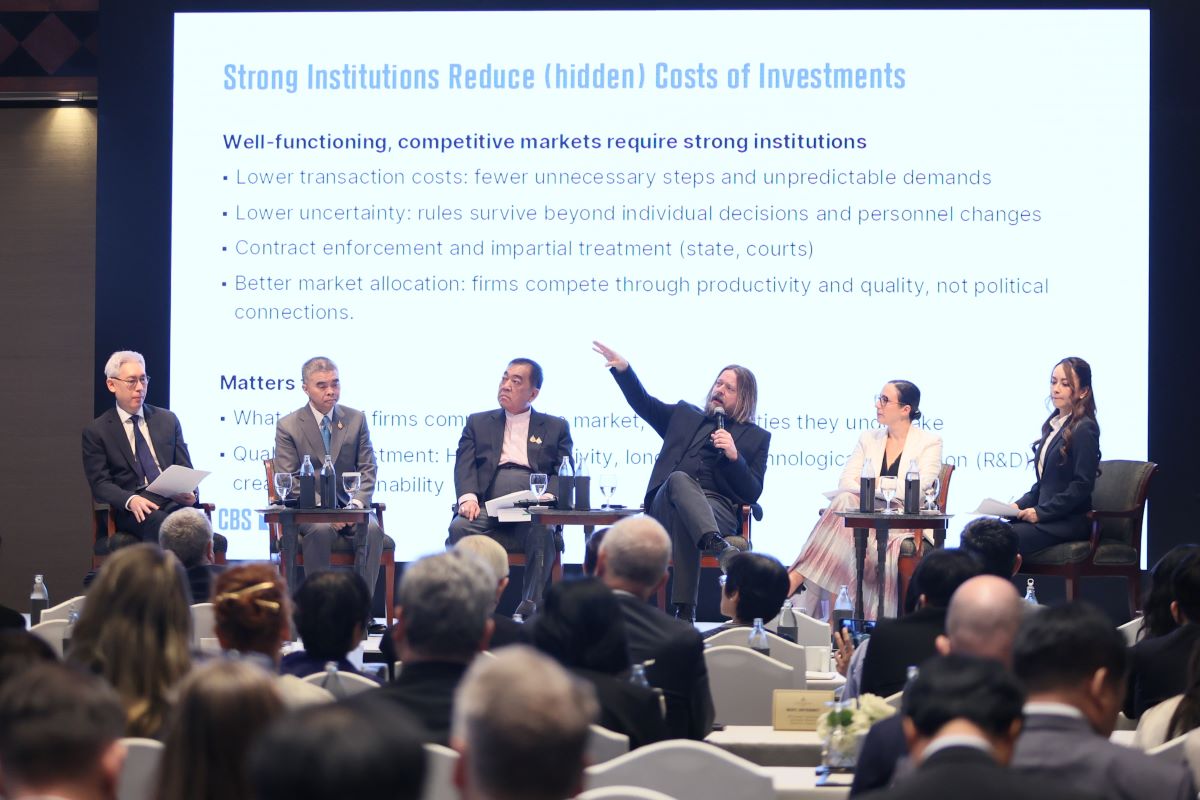
In the high-level dialogue, executives of public oversight agencies, the private sector, and experts from the OECD and the Nordics revealed concrete progress in restructuring Thailand’s institutions as follows:
Accelerating Three Laws Against Transnational Bribery (NACC)

Mr. Nitipan Prachuabmoh, Secretary-General of the National Anti-Corruption Commission (NACC), disclosed that Thailand joined the OECD Anti-Bribery Convention more than a decade ago and has ratified the UNCAC. Most recently, the NACC has expedited amendments to three key laws ready for submission to the Cabinet: (1) laws penalising bribery of public officials to cover foreign companies bribing in Thailand, (2) laws on corporate liability for both domestic and foreign entities, and (3) non-trial resolution mechanisms so offenders can make restitution quickly. In addition, the NACC works closely with Nordic police in transnational bribery cases alongside implementing the “One Department, One Transparency” initiative and partnering with Thailand’s Private Sector Collective Action Against Corruption (CAC).
Rolling Out Five Digital and AI Measures to Close Discretion Loopholes (PACC)

Mr. Phumiwisarn Kasemsuk, Secretary-General of the Public Sector Anti-Corruption Commission (PACC), pointed out that “tea money” and hidden costs stem from three causes: excessive use of discretion, delays, and lack of transparency, which aligns with Thailand’s CPI score of 33/100 (ranked 116th out of 186 countries), while 2026 (B.E. 2569) data also reflects gaps between law and enforcement. The PACC is therefore driving five structural measures under the concept “Make the honest path the easiest path”:
(1) advancing whistleblower protection legislation together with the Ministry of Justice, the NACC, and the Office of the Council of State;
(2) integrating complaint-handling systems into a single platform (ACOC) covering 40 agencies across criminal, administrative, and civil dimensions;
(3) using an AI system (CRAMP) to audit budgets of large-scale projects starting from the budget allocation stage;
(4) expanding digital services so citizens can file complaints regarding public services via the “Thang Rath” application, alongside scaling up the online licensing model from the Sriracha Land Office to 15 land offices in the Eastern Economic Corridor (EEC); and
(5) elevating the Integrity and Transparency Assessment (ITA) towards measuring actual behaviour (Behavior-Based ITA).
Joining Forces Across 45 Private Organisations to Cut Hidden Costs and Protect SMEs (JSCCIB)

Dr. Poj Aramwattananont, Chairman of the Thai Chamber of Commerce and the Joint Standing Committee on Commerce, Industry and Banking (JSCCIB), stated that although Thailand enjoys advantages in location and infrastructure, businesses still shoulder hidden costs from duplication, delays, and uncertain legal interpretation—particularly SMEs, which are hit harder than large corporations. The JSCCIB and its network of 45 organisations have therefore established a private-sector working group on anti-corruption, working with the public sector to review Acts, ministerial regulations, and ministerial notifications that pose obstacles, supporting the “One Department, One Transparency” initiative, and uplifting SMEs to conduct business ethically and free from money laundering, among other efforts.
Institutional Recommendations from the OECD and the Nordic Countries

Ms. Nejla Saula, Head of the Anti-Corruption and Integrity in Government Division at the OECD, revealed that Thailand currently attracts around US$18 billion in foreign direct investment (FDI), which remains below its potential relative to FDI-to-GDP ratios in other countries, while the 2026 OECD report also indicates that Thailand has a 44 per cent implementation gap in putting integrity measures into practice. She therefore recommended that Thailand urgently build unified legal standards across all agencies; expand conflict-of-interest and lobbying rules to cover the executive, the judiciary, law enforcement agencies, and local administrative organisations; pair this with using AI to open government data, assess emerging risks including scams, and develop measurement systems based on citizens’ direct experiences (such as South Korea’s ITA system), while exchanging lessons with newer member countries such as Costa Rica and Romania.

Meanwhile, Professor Mogens Kamp Justesen of Copenhagen Business School reiterated that strong institutions are central to building confidence and attracting quality investment instead of relying on political connections, proposing three institutional pillars for Thailand:
(1) strengthening the capacity and independence of the civil service based on merit, continuity, and protection for officials to enforce the law impartially;
(2) building a rule-based, transparent, and accountable administrative system that reduces duplication without sacrificing transparency, and provides avenues for challenge or appeal such as in public procurement; and
(3) regulating business–politics ties and overseeing political money through open, transparent dialogue forums alongside rules governing lobbying, political donations, and conflicts of interest arising from the revolving door phenomenon.
The forum was also honoured by H.E. Ms. Anna Hammargren, Ambassador of Sweden to Thailand, H.E. Ms. Kristiina Kuvaja-Xanthopoulos, Ambassador of Finland to Thailand, and H.E. Mr. Frode Solberg, Ambassador of Norway to Thailand, alongside representatives from the OECD and Thai agencies, with the morning sessions moderated throughout by Dr. Nattha Komolvadhin, News Director at THE STANDARD.



While the afternoon featured lively exchanges on building confidence among foreign investors and designing trust using the Nordic approach to build relationships between the public and private sectors—with Dr. Phiset Sa-ardyen, Executive Director of TIJ, joining as a speaker—as well as scenario analysis on bribery and corruption to reflect the situation and propose solutions.
Overall, the forum reflected the shared determination of all sectors to turn the goal of OECD membership into sustainable structural reform, so that the rule of law and good governance help build stability and public confidence in the state, ease burdens on the private sector and civil society, foster fair competition, and genuinely improve the quality of life of Thai people.