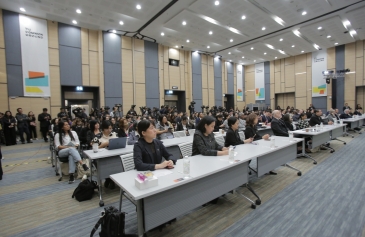





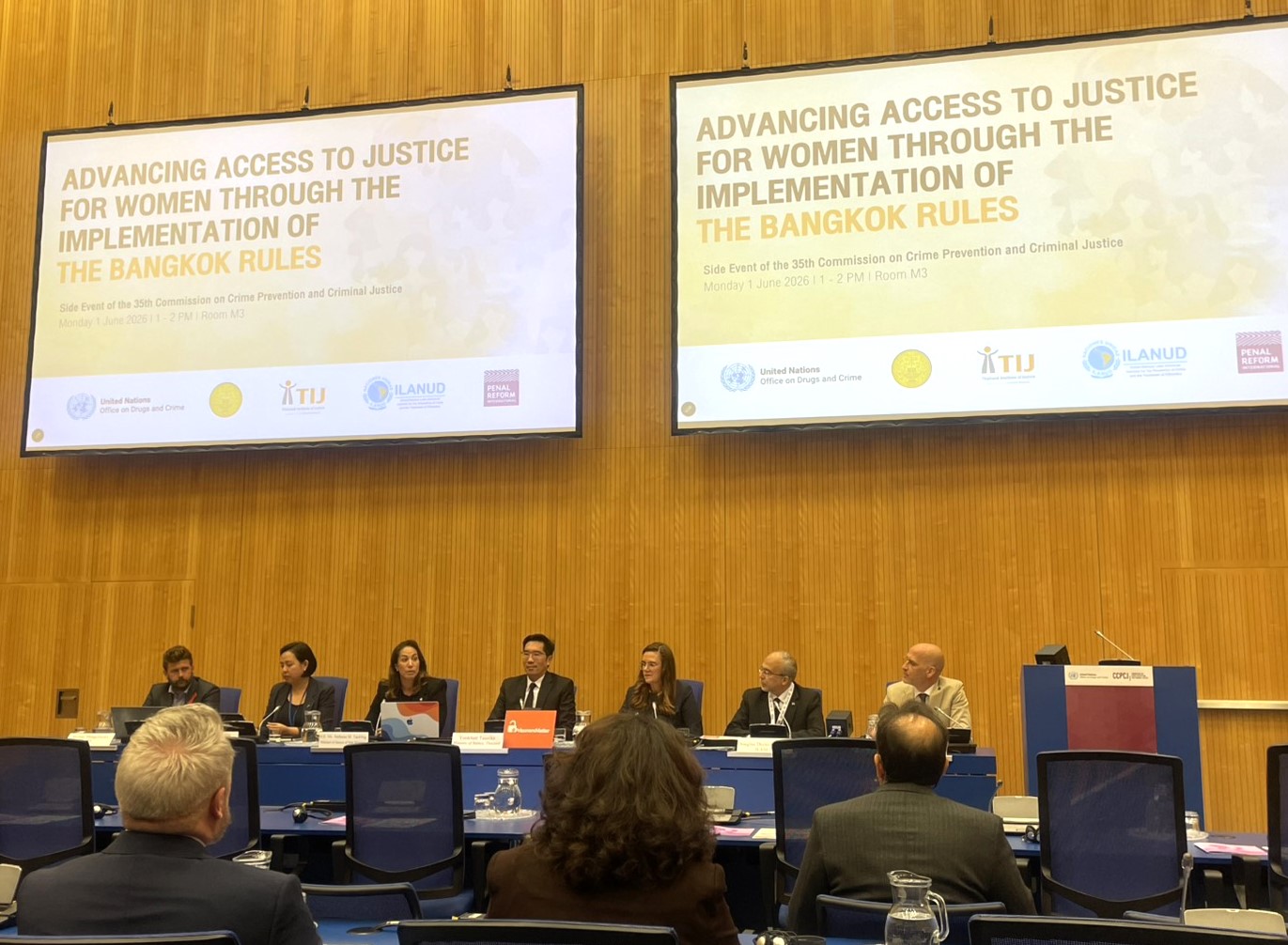
Vienna, 1 June 2026— The Thailand Institute of Justice (TIJ) joined hands with the Ministry of Justice of Thailand, the United Nations Office on Drugs and Crime (UNODC), the United Nations Latin American Institute for the Prevention of Crime and the Treatment of Offenders (ILANUD), and Penal Reform International (PRI) convened a side event on “Advancing Access to Justice for Women through the Implementation of the Bangkok Rules” at the 35th Session of the Commission on Crime Prevention and Criminal Justice (CCPCJ). The event brought together policymakers, practitioners, advocates to examine how the Bangkok Rules can be strengthened and operationalised to address systemic barriers facing women in contact with the criminal justice system worldwide.
_260602_5.jpg)
Opening Remarks: Reaffirming the Bangkok Rules
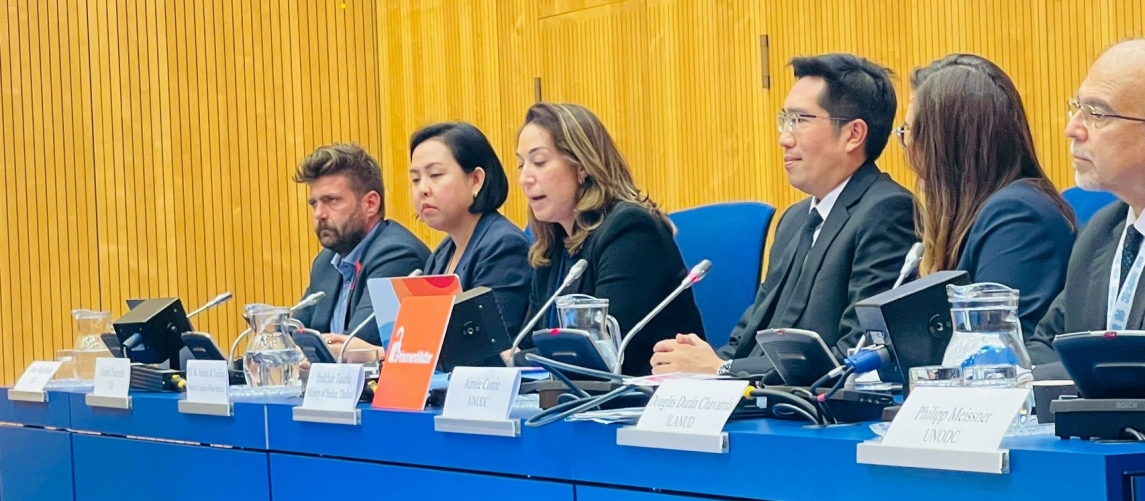
The event commenced with welcome remarks by Mr. Yordchatr Tasarika, Legal Advisor of Ministry of Justice of Thailand, and Ms. Aimée Comrie, Chief of Crime Prevention and Criminal Justice Section, Division for Treaty Affairs, UNODC. Both speakers emphasized the urgent need to address the structural inequalities and vulnerabilities that drive women’s contact with the criminal justice system, reaffirmed the importance of the Bangkok Rules in advancing gender-responsive justice, non-custodial measures, and meaningful access to justice for women, and highlighted the Bangkok Rules Accelerator—a new global platform designed to support implementation, foster collaboration, and scale the impact of the Rules across diverse legal and social contexts.
_260602_2.jpg)
“Access to justice is not only about the ability to appear before a court. It is also about whether justice systems are fair, responsive, and able to address the lived realities of women... This is precisely why advancing access to justice for women through the implementation of the Bangkok Rules remains crucial.”— Mr. Yordchatr Tasarika
"Not only to recognise but also to take action, not only to commit but also translate into practice, not only pilot but also institutionalise — and not only to talk about women in conflict with the law, but also to listen to them."— Ms. Aimée Comrie
Special Remarks: Women, Justice, and Systematic Reform
H.E. Ms. Nathalie M. Tackling, Minister of Justice of Sint Maarten, highlighted the need to create justice systems that are proportionate, trusted, and humane, and that respond to the realities of women’s lives through gender-responsive policies, rehabilitation, reintegration support, and cross-sectoral collaboration. Minister Tackling articulated four priorities for advancing the Bangkok Rules: gender-responsive detention, meaningful rehabilitation, post-release support, and the reduction of stigma.
“Smallness is not a reason to do less for women; it is the reason to make sure the few are not lost inside a system built for many.”, H.E. Ms. Nathalie M. Tackling
_260602_3.jpg)
Panel Discussion: Structural Drivers and Gender-Responsive Approaches
The panel featured Chontit Chuenurah, Director of the Office for the Bangkok Rules and Treatment of Offenders, TIJ; Douglas Durán Chavarría, Director of ILANUD; and Jérôme Mangelinckx, Global Policy Manager, PRI
Panelists examined the structural drivers of women’s involvement in the criminal justice system, including poverty, social exclusion, and gender-based discrimination. The discussion addressed the importance of advancing women’s access to justice through gender-responsive and people-centred approaches. Central to discussion was the critical role of non-custodial measures, legal aid, and community-based interventions in addressing the root causes of female imprisonment. The panelists also reflected on global advocacy efforts to counter the criminalisation of women due to poverty and status, and explored how the Bangkok Rules can serve as a practical framework for promoting fair, proportionate, and effective justice responses for women.
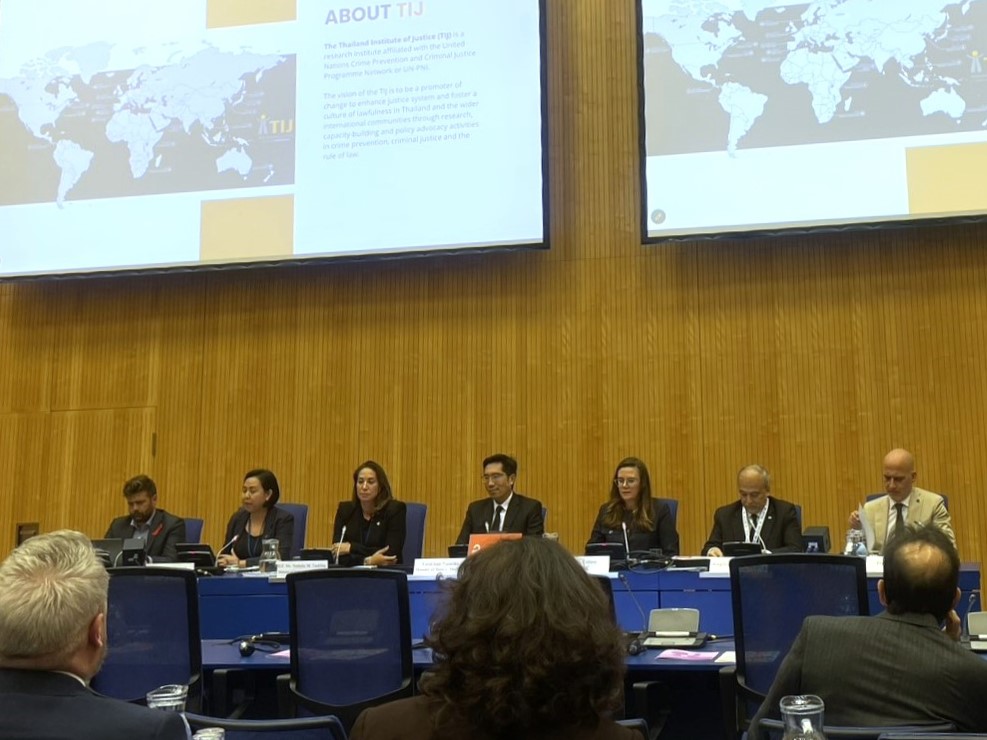
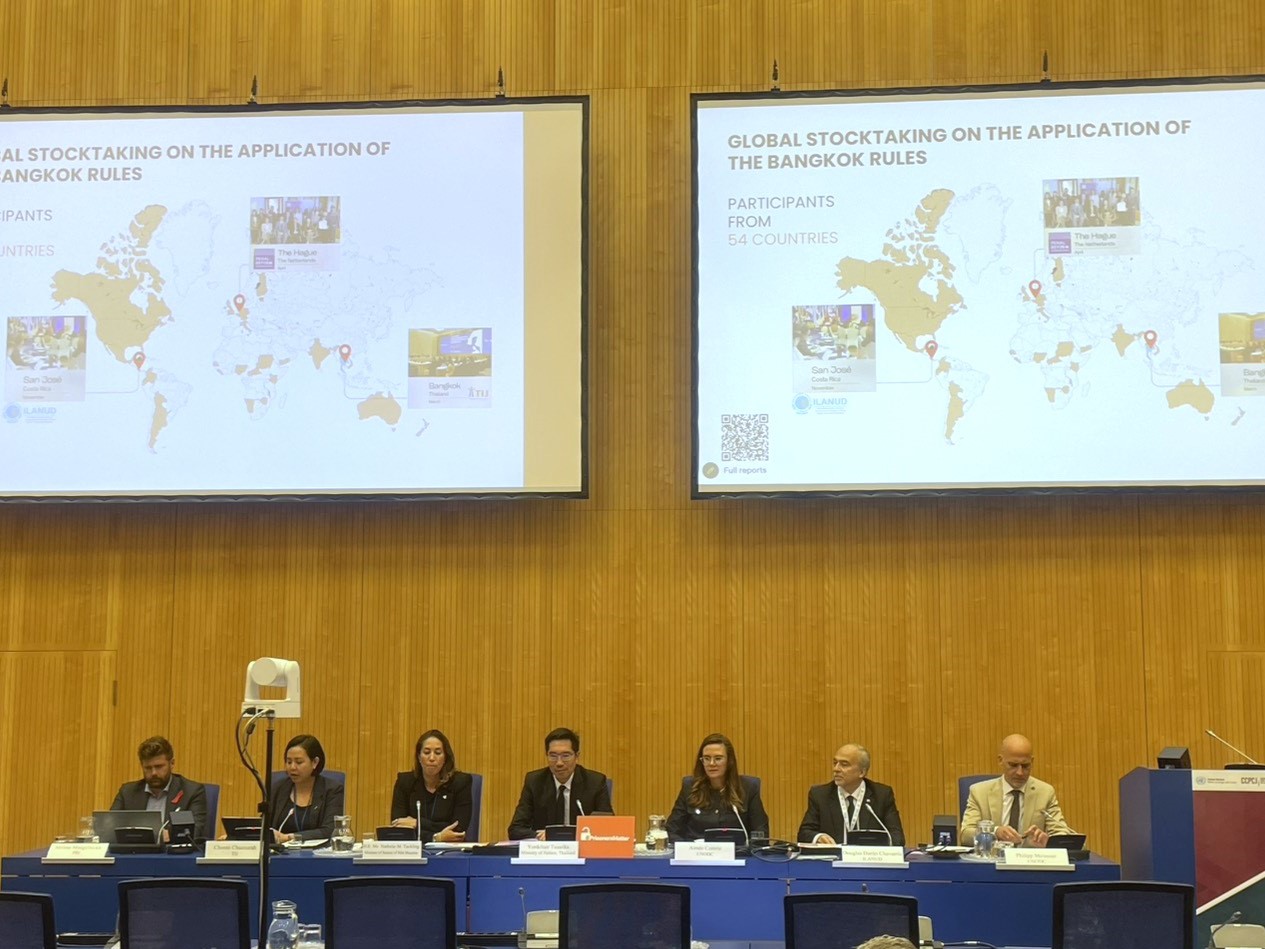
TIJ Presentation: Beyond Custody — Reimagining Access to Justice for Women
_260602_1.jpg)
Representing TIJ, Ms. Chontit Chuenurah presented findings from TIJ's global stocktaking on the implementation of the Bangkok Rules, highlighting the importance of moving beyond detention-centred responses and addressing the barriers women face in accessing justice, particularly in the pre-trial stage. The presentation stressed the need for gender-responsive judicial decision-making, legal aid, non-custodial measures, and community-based support in ensuring fair, proportionate, and effective justice outcomes for women. Chonti also shared promising practices from the Global South that have successfully reduced unnecessary detention and improved access to justice for women in contact with the law.
“In a world increasingly shaped by uncertainty and competing priorities, there is a risk that the needs of women in contact with the law will fade from view. The Bangkok Rules remind us that they should not.”, Ms. Chontit Chuenurah
ILANUD Presentation: From Rules to Rights — Non-Custodial Measures and Women's Access to Justice
Mr. Douglas Durán Chavarría presented an analysis of trends in women’s imprisonment and pre-trial detention across Latin America, noting the disproportionate impact of drug-related offences on women and the structural reliance on detention. He emphasized the need to address barriers to justice through evidence-based, gender-responsive approaches, including greater use of non-custodial measures and the effective implementation of the Bangkok Rules.
“Pre-trial should be a measure of last resort, and with full account of the structural discrimination that shapes women’s pathways into the justice system”, Douglas Durán
PRI Presentation: Global Advocacy around the Criminalisation of Women due to Poverty and Status
Mr. Jérôme Mangelinckx discussed the findings of PRI’s research on the intersection between poverty and incarceration of women, highlighting the ways in which criminal justice systems disproportionately impact women through both direct and indirect measures such as legislative penalties for vagrancy or imprisonment for non-violent low-level crimes that often are borne out of necessity and survival.
“While the Bangkok Rules play a vital role in protecting the rights of women in detention, equal attention must be given to the pathways that lead women into the criminal justice system in the first place.”, Mr. Jérôme Mangelinckx
_260602_4.jpg)
Looking Ahead
Women in conflict with the law are too often invisible — overlooked by systems that were not built for them and underserved by policies that fail to account for their realities. This side event was a reminder that visibility alone is not enough. Real progress demands gender-responsive systems, meaningful alternatives to detention, and a willingness to address the poverty and inequality that lie at the root of women's criminalisation.
TIJ remains committed to driving this agenda through research, capacity-building, and global collaboration. For more information on TIJ's work on the Bangkok Rules, visit www.tijbangkokrules.org.